

Safety Data Sheet
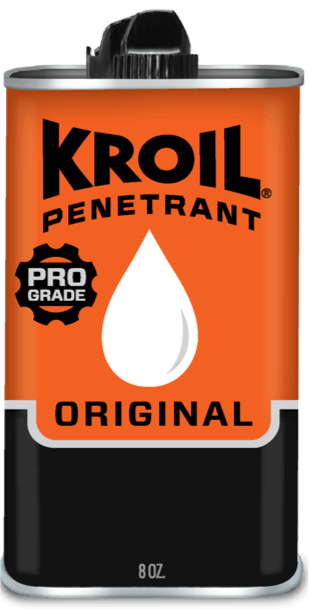
Kroil Penetrant Original liquid - North America (US & Canada) - English
Download

Kroil products are in high demand. Join our distributor network today.
Start the ApplicationGet in touch with our team and we'll help you find the right products for your business.
Request Product Info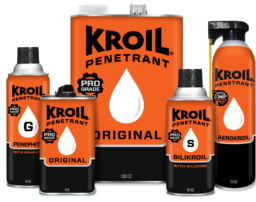
Loosen frozen metal parts the professional way, with Kroil Original Penetrant in liquid and aerosol (Aerokroil) formulas. Discover why Kroil has been trusted to help loosen bolts in various applications since 1939.
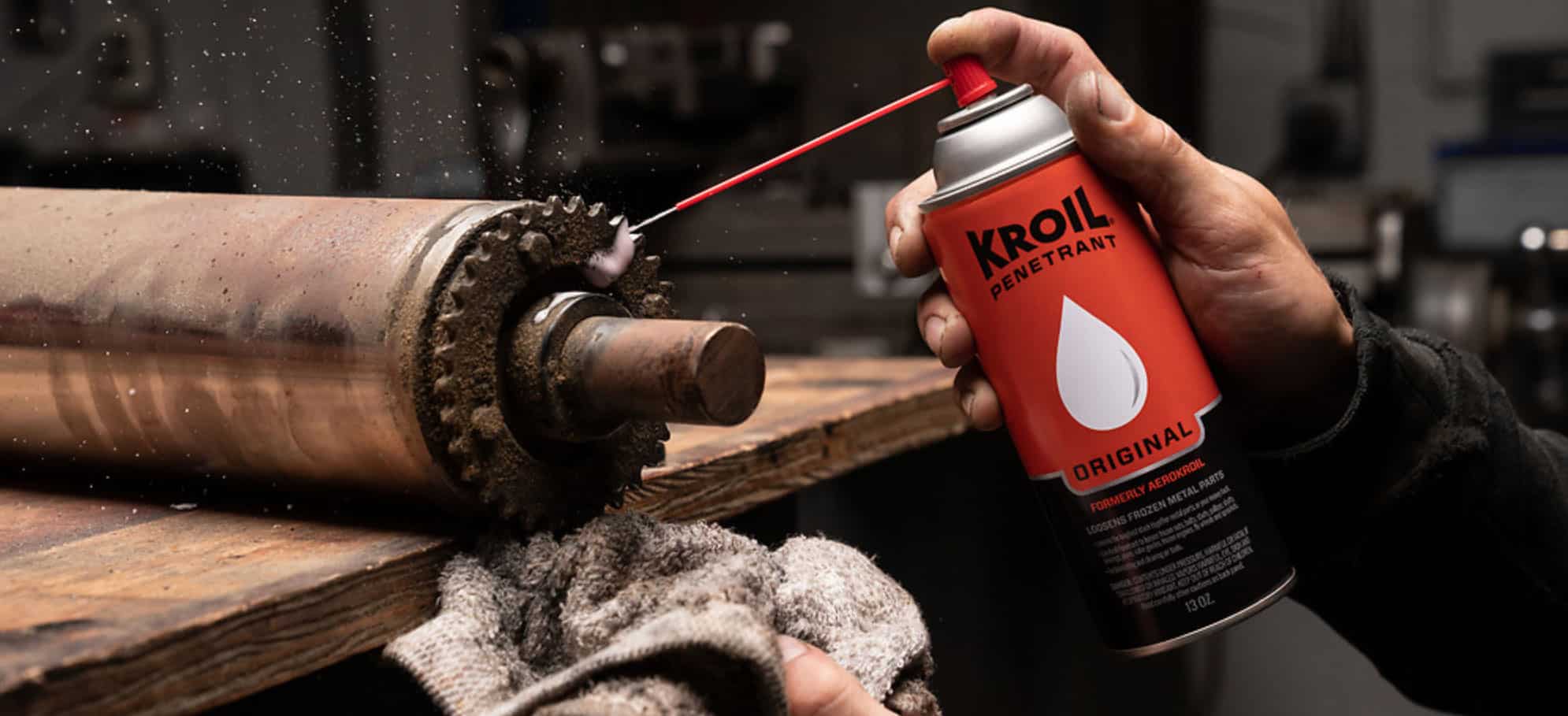
When it comes to freeing corroded items in tough spaces, nothing rivals powerful, industry-proven Kroil penetrating oil. Used and trusted by pros and experienced DIYers alike since 1939, Kroil quickly loosens rusted nuts and bolts, frees frozen shafts, pulleys, and more. No space is too tight to reach, thanks to Kroil’s ability to penetrate the smallest opening, thread or crevice. Corrosion meets its match, as Kroil helps remove and prevent rust, cleans and lubricates, and displaces moisture. NEW! NSF Nonfood Compounds Program Listed Category Code: H2 Registration #165745 (8oz and gallons). 50-State VOC Compliant. Made in the U.S.A. (Portions of packaging imported.)
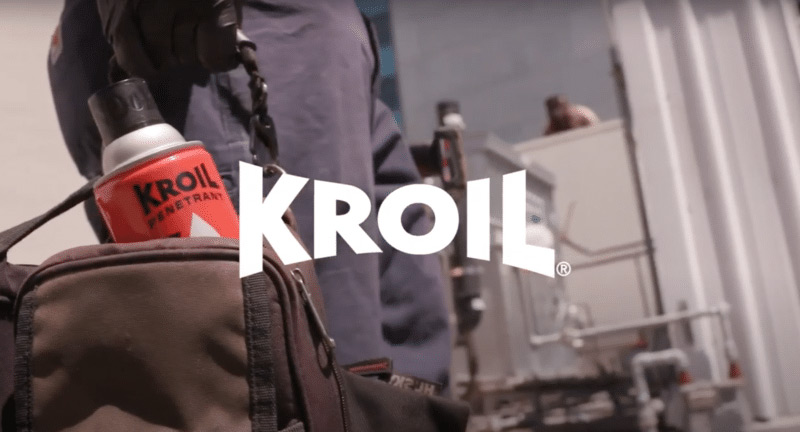
Watch how a leading commercial HVAC contractor uses Kroil to help keep their clients cool and comfortable.
Penephite is Kroil Penetrant with Graphite—it combines Kroil’s penetrating formula with dry graphite lubricant for applications requiring extreme-temperature or high-load lubrication after penetration. Graphite remains stable at temperatures where oil-based lubricants break down, making Penephite the correct choice for applications involving high heat (exhaust components, furnace hardware, industrial ovens) or very high loads (press-fit components, heavy equipment pivot points). Kroil Original is preferred for general penetration; Penephite is preferred when the freed component will continue to operate under conditions that degrade conventional lubricants.
Kroil is a petroleum-based penetrating oil manufactured by Kano Laboratories. It is formulated to creep into the microscopic gaps between corroded or seized metal parts and break the corrosion bond holding them together. It is used primarily to free rusted bolts, nuts, fittings, and frozen mechanical components in automotive, industrial, aviation, agricultural, utilities, and home maintenance applications. Kroil has been manufactured in Nashville, Tennessee since 1950 and is trusted by maintenance professionals, mechanics, and tradespeople across more than a dozen industries.
Kroil works through capillary action—its low surface tension and small molecular structure allow it to flow into the micro-spaces between corroded metal surfaces where water and other lubricants cannot reach. Once inside the corrosion bond, Kroil displaces moisture, coats metal surfaces with a thin lubricating film, and reduces the friction and adhesion that keeps seized parts locked in place. Unlike rust removers, Kroil does not chemically dissolve rust; it lubricates around and beneath it, allowing parts to be turned or removed with significantly less force.
Both products have similar penetrating properties, and can be used in multiple applications. The biggest difference between the two is the lasting lubricating effect of silicone in Kroil Penetrant with Silicone (SiliKroil). In addition to lubrication, silicone helps to displace moisture, which adds an extra element of protection.
For most applications, Kroil begins to penetrate within 15 to 30 minutes of application. For heavily corroded or deeply seized parts, allowing Kroil to soak for several hours—or overnight—significantly improves results. A second application after the first soak can further loosen stubborn fasteners. Penetration time depends on the severity of corrosion, the material being treated, and the amount of Kroil applied. In customer reviews, many users report freeing parts that had been stuck for decades, after an extended soak with Kroil.
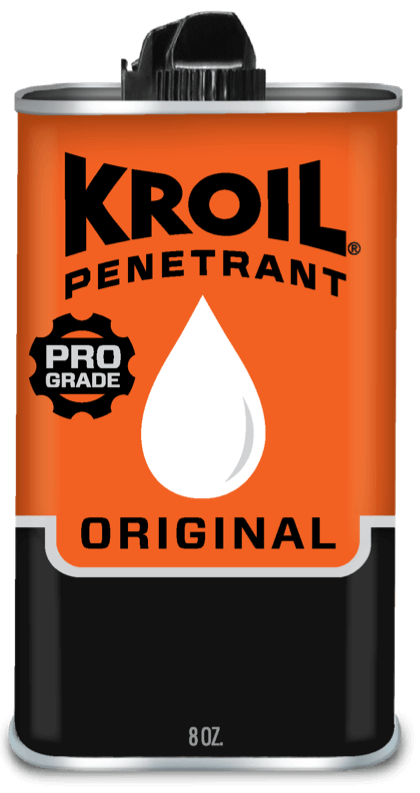
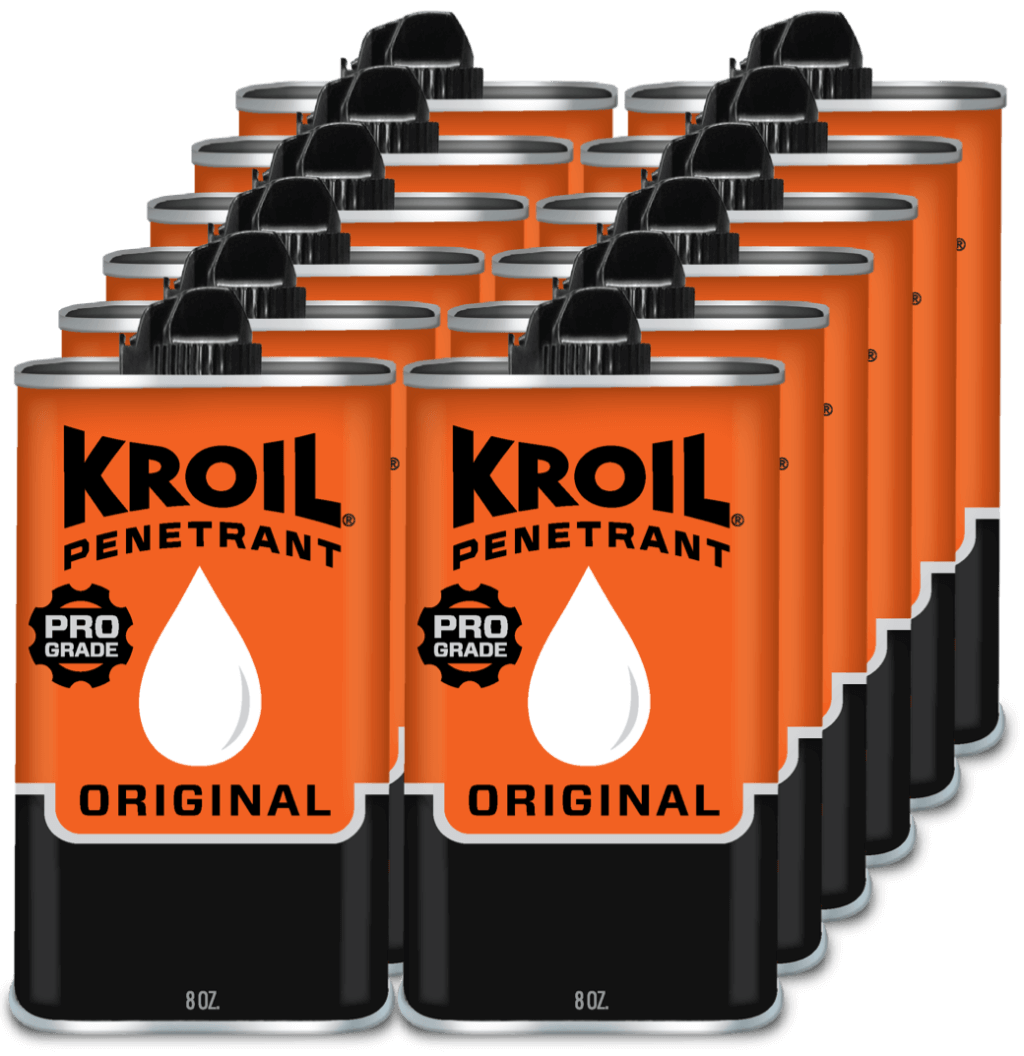
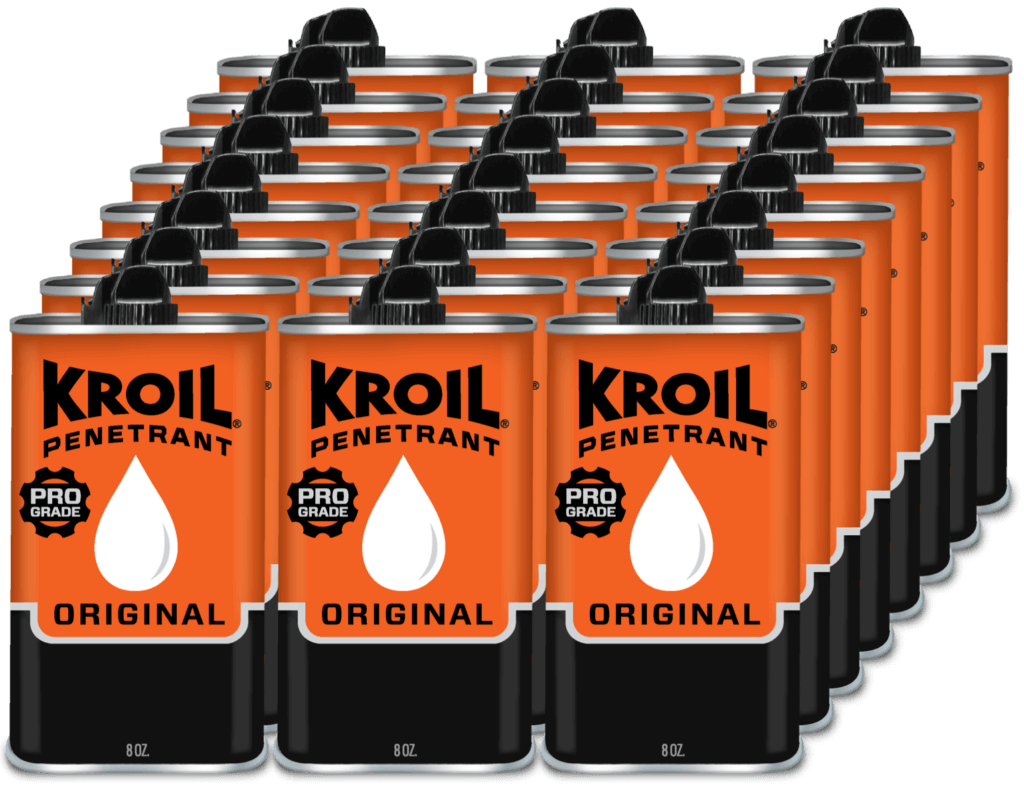
Yup, the exact same product is in all Kroil Original Penetrant liquid and aerosol cans.
Kroil Original Penetrant is safe for use on steel, iron, aluminum, brass, copper, and most metal alloys. It is generally safe on most plastics and painted surfaces when used as directed, though prolonged contact with certain plastics or rubber compounds may cause softening or swelling. For applications involving rubber seals, plastic components, or food-contact surfaces, Kroil Clear Food Grade Penetrating Oil (NSF-H1 certified) or Silikroil (Kroil with silicone) are the recommended alternatives. Always refer to the product Safety Data Sheet for material compatibility guidance.
If there is already current damage to the blued finish, Kroil penetrants can possibly creep under and lift the finish from the gun/rifle. In the event of overspray, simply wipe excess Kroil off the affected area(s) with a clean dry cloth.
Kroil products should be used in well-ventilated areas. The aerosol formulation produces fine mist particles that should not be inhaled; use outdoors or in spaces with strong airflow when possible. Kroil Original liquid penetrant has a lower vapor pressure than the aerosol and is suitable for controlled indoor shop environments with adequate ventilation. Keep away from open flames, sparks, and high heat sources, as Kroil is a petroleum-based product. Full safety guidance is available in the Kroil Safety Data Sheet at kroil.com/resources/datasheets/.
Please visit our where to buy page on this website for purchasing instructions.
We sure can, please call us at 800-311-3374.
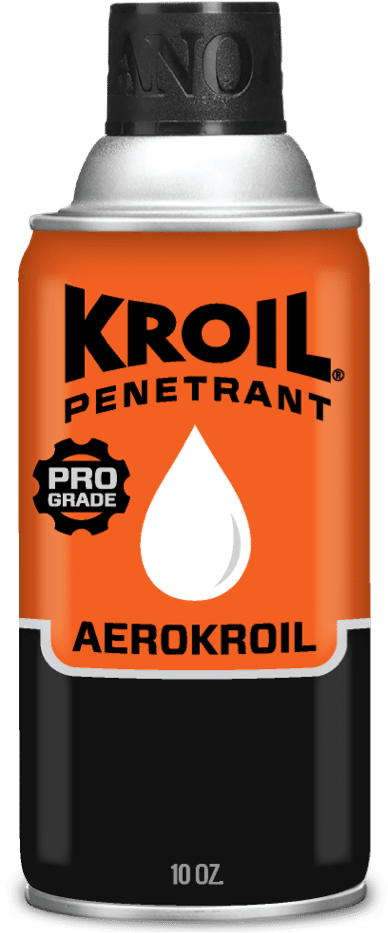
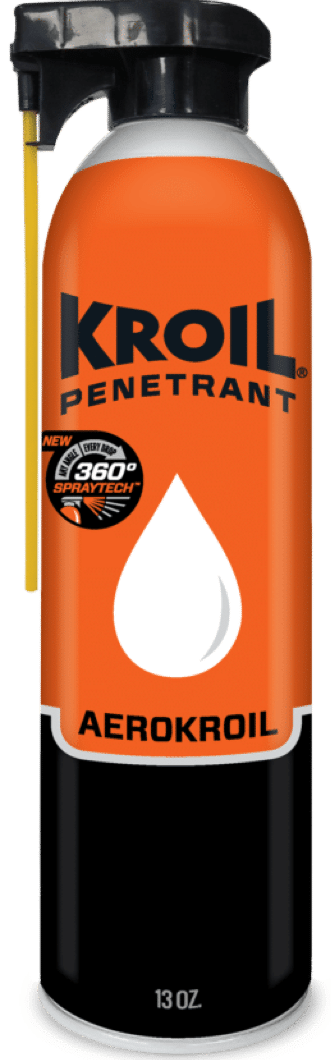
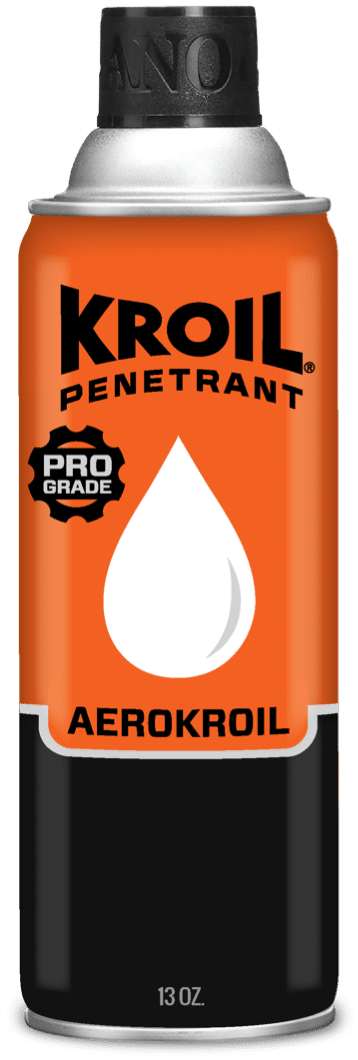
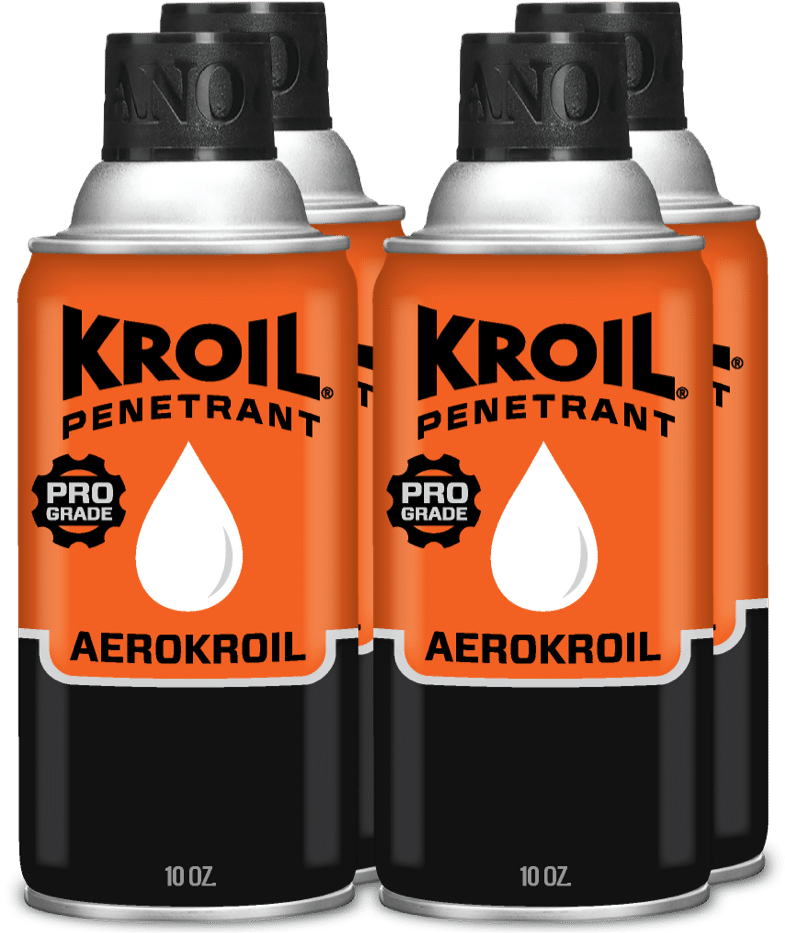
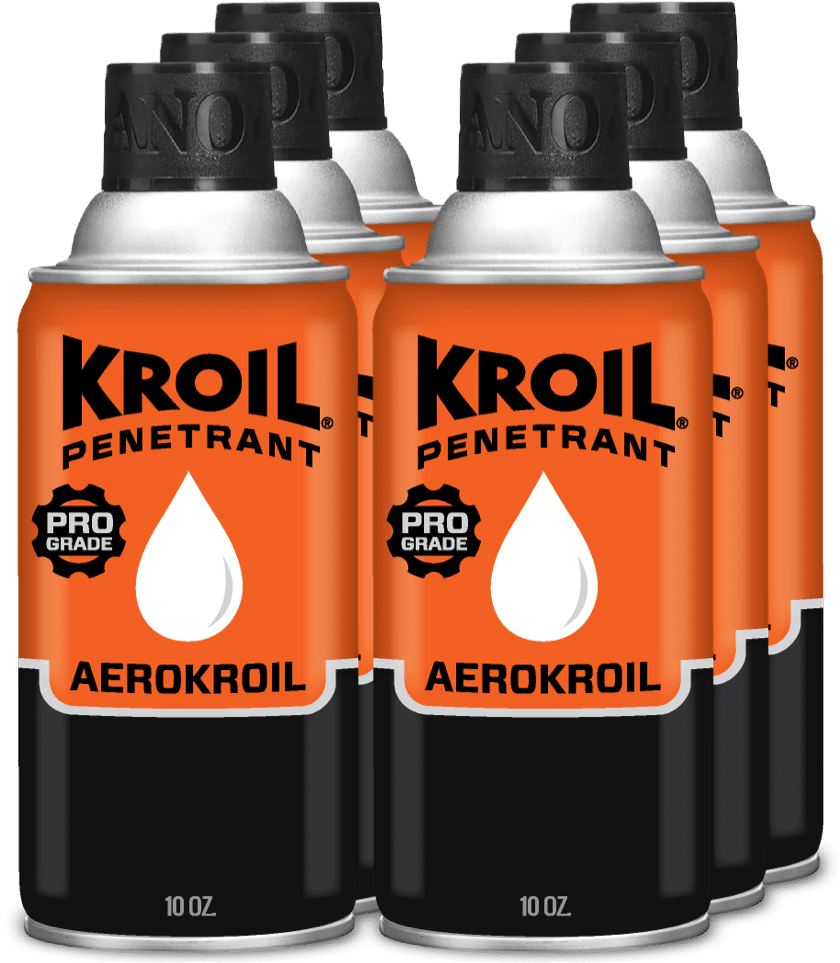
Aerokroil is the aerosol spray formulation of Kroil Original Penetrant. The active penetrating chemistry is the same—it creeps into corroded threads and seized metal parts—but the aerosol delivery allows for more precise targeting of hard-to-reach areas, including overhead applications and tight spaces where a liquid drip could not work well. Kroil Original in liquid form offers better value for high-volume applications (soaking large assemblies, using with shop rags) while Aerokroil is preferred for spot applications, field use, and anywhere directional spray is needed.
Yes, Kroil penetrants are safe and effective on all metals.
Apply Kroil directly to the rusted bolt, nut, or fitting, making sure the product contacts the threads and any visible corrosion. Allow 15 to 30 minutes for initial penetration. For bolts that have been corroded for an extended period, apply a second coat and allow several hours or overnight before attempting removal. After soaking, apply steady rotational pressure with the appropriate wrench or socket—avoid sudden impact until the fastener begins to move. For very stubborn fasteners, alternating tightening and loosening with the wrench (“working” the fastener) while Kroil is still wet often breaks the bond completely. Repeat applications as needed.
Kroil Original Penetrant is widely regarded by professional mechanics and maintenance technicians as one of the most effective penetrating oils for freeing rusted bolts and seized fasteners. Its low surface tension and molecular penetration capability allow it to reach corrosion that lighter penetrants cannot. For exhaust bolts, suspension hardware, and heavily corroded automotive fasteners, Kroil’s extended dwell time formulation provides consistent results. Over 700 verified customer reviews specifically reference freeing rusted bolts and fasteners, many describing success on parts that had been stuck for 10, 20, or 30+ years.
Yes, Kroil products are available to Amazon customers through our authorized reseller, Pattern Products. We also encourage you to shop from a Kroil distributor in your area. Visit our where to buy page for a full listing, and check back often, as new distributors are frequently added.
Yes. Kroil is specifically formulated for heavily corroded fasteners, including those that have been rusted in place for years or decades. Customer reviews document successful removal of bolts and fittings corroded for 20, 30, and in some cases more than 50 years. Extended dwell time is the key variable—for severe corrosion, multiple applications over 12 to 24 hours produce significantly better results than a short soak. In extreme cases, applying Kroil and leaving it overnight, then applying a second coat in the morning before attempting removal, is the recommended approach. To remove rust from metal parts, use Exrust. To proactively prevent rust and corrosion from forming, use Kroil Shield.
Exhaust bolts and manifold studs are among the most challenging fastener applications due to the combination of extreme heat cycling and road salt exposure. Apply Kroil generously to the stud base and any exposed threads while the exhaust is cool. Allow a minimum of 30 minutes soak time; overnight is strongly preferred. Avoid applying Kroil to a hot exhaust system—the heat will cause rapid evaporation before penetration can occur. For broken studs, apply Kroil around the stud perimeter and allow it to wick in before attempting stud extraction. Many professional mechanics apply Kroil the evening before a planned exhaust repair as standard practice.
Yes, Kroil can be used on stainless steel fasteners. These fasteners are particularly prone to galling—a form of seizing caused by friction welding at the thread surface—especially in marine, food processing, and chemical plant environments. Kroil’s penetrating action helps break the initial bond before further galling occurs during removal attempts. Apply Kroil, allow 15-30 minutes of soak time, and use steady, slow rotational force rather than impact or sudden torque. For ongoing stainless steel fastener lubrication to prevent future galling, Silikroil (Kroil with silicone) applied at installation is recommended.
For best results: (1) Clean away loose surface rust or debris from around the fastener head before applying Kroil so the oil can reach the threads. (2) Apply Kroil directly to the threads and any gap between the fastener and the mating surface. (3) Allow adequate dwell time—minimum 15 minutes for light corrosion, several hours to overnight for heavy corrosion. (4) Apply a second coat after the first has had time to penetrate. (5) Attempt removal while the fastener is still wet with Kroil. (6) If the fastener still will not move, repeat the soak cycle rather than increasing force—excessive torque risks breaking the fastener head before Kroil has fully penetrated. To remove rust from metal fasteners, use Exrust. To protect against rust and corrosion in the future, use Kroil Shield.
Kroil and PB Blaster are both purpose-built penetrating oils, but they differ in formulation, viscosity, and depth of penetration. PB Blaster is widely available at retail and is an effective general-purpose penetrant for moderate corrosion. Kroil’s formulation is designed for deeper molecular penetration, making it the preferred choice of professional service and maintenance technicians for use on severely seized or long-corroded fasteners. It reliably performs when PB Blaster doesn’t. Kroil has historically been available through industrial distribution and specialty retailers, which has made it less familiar to general consumers despite its strong professional reputation. Many professional mechanics describe Kroil as the product they reach for when PB Blaster has not produced results.
Kroil and WD-40 serve different primary purposes. WD-40 is primarily a water displacer and light lubricant designed for moisture protection and light corrosion prevention. Kroil is engineered specifically as a high-performance penetrating oil designed to free seized and corroded metal parts that cannot be moved by lighter products. Kroil’s molecular structure gives it significantly greater penetration depth and staying power on corroded surfaces. Many professional mechanics and maintenance technicians use WD-40 for general maintenance and Kroil specifically when parts are genuinely stuck. Customer reviews frequently describe Kroil succeeding on applications where WD-40 did not.
Liquid Wrench is a broad-category lubricant brand that includes penetrating oils among its product range. Kroil is a single-purpose penetrating oil optimized specifically for freeing seized and corroded metal parts. Professionals in industrial maintenance, aviation, utilities, mechanical, and automotive repair frequently cite Kroil’s superior penetration depth and extended soak-time performance compared to multi-purpose formulations like Liquid Wrench. For light-duty or occasional use, Liquid Wrench is a capable option; for demanding professional applications involving heavy corrosion or high-stakes components, Kroil is the preferred choice among maintenance professionals.
Kroil is priced at a premium relative to mass-market penetrating oils, and professional users consistently report that it delivers commensurate value, particularly on applications where cheaper alternatives have failed. The relevant comparison is not product price but total cost: a less expensive penetrant that does not free a seized bolt may result in broken hardware, stripped threads, damaged housings, or costly professional labor—expenses that dwarf the difference in product cost. In customer reviews, users frequently mention that Kroil saved them from a larger repair or a part that would have required cutting or drilling to remove. For professional shops, the reliability premium is well established.
Kroil’s primary differentiator is its molecular penetration formula, which gives it one of the lowest surface tension profiles among commercially available penetrating oils. This allows it to flow into gaps smaller than competing products can reach—down to approximately 0.0003 inches, according to Kano Laboratories’ own product specifications. Combined with an 85+ year track record in industrial and professional maintenance applications, Kroil occupies a distinct position as the penetrant of choice for high-stakes or previously intractable applications. Its product line also includes specialty formulations (Silikroil with silicone, Kroil Clear for food-contact environments, Penephite with graphite) that address use cases general penetrants do not.
Automotive repair professionals most commonly use Kroil Original Penetrant (liquid) and Aerokroil (aerosol) for freeing rusted exhaust bolts, manifold studs, brake caliper slide pins, suspension fasteners, lug nuts, and corroded battery terminals. Aerokroil is preferred for precision applications on overhead components and tight engine bay spaces. Kroil Original liquid is used for soaking larger assemblies or heavily corroded components. Auto restoration shops frequently use Kroil on vehicles that have been in storage for years, where comprehensive corrosion on fasteners throughout the vehicle makes a long-dwell penetrant essential. Additional products of value to auto shops include Kreen all-in-one gas & oil treatment, Floway solvent, Exrust industrial strength rust remover and Kroil Shield corrosion inhibitor.
Kroil should not be applied directly to brake pads, brake rotors, or friction surfaces, as petroleum-based products contaminate friction materials and significantly reduce braking performance. For brake caliper slide pins, caliper bracket hardware, and brake line fittings that are seized or corroded, Kroil can be used carefully with masking or controlled application to avoid contact with friction surfaces. Always clean any overspray thoroughly and allow components to dry before reassembly. If brake friction components have been contaminated, they should be replaced before returning the vehicle to service.
Kroil Original Penetrant and Aerokroil are the most commonly used Kroil products in aviation maintenance contexts. Applications include freeing corroded airframe fasteners, loosening seized control cable fittings, treating corroded inspection panel hardware, and addressing corrosion on landing gear components. Aerokroil’s aerosol format is particularly effective for aircraft applications where access to fasteners is restricted and directional spray is needed. Aviation maintenance professionals often note Kroil’s effectiveness on fasteners subjected to the combination of vibration, moisture, and dissimilar metal corrosion common in airframe environments.
Farm and agricultural operations use Kroil across a wide range of equipment maintenance tasks: freeing seized tractor hardware and implement fasteners corroded by soil, moisture, and fertilizer exposure; loosening rusted PTO shaft components and hydraulic fittings; treating corroded plow and planter hardware; and maintaining irrigation and water system connections that are repeatedly exposed to water and mineral deposits. Agricultural environments are particularly harsh on metal fasteners due to constant moisture, soil contact, and long periods of non-use between seasons—conditions that make Kroil’s deep-penetrating formulation highly effective compared to lighter lubricants. To remove rust from metal parts, use Exrust. To proactively prevent rust and corrosion from forming, use Kroil Shield.
Industrial maintenance teams use Kroil to free seized machinery fasteners, loosen corroded valve stems and fittings, maintain production equipment that cannot be taken offline for extended repairs, and address the corrosion issues common in wet, chemical, or high-temperature manufacturing environments. Plant maintenance supervisors and MRO (maintenance, repair, and operations) buyers frequently stock Kroil as a standard maintenance supply. Customer reviews from manufacturing environments frequently cite Kroil’s ability to address corrosion in older facilities where infrastructure has not been replaced—applications where the high cost of machine downtime makes effective penetration essential. To remove rust from metal parts, use Exrust. To proactively prevent rust and corrosion from forming, use Kroil Shield.
Kroil is widely used in marine maintenance for freeing corroded stainless-steel hardware, bronze through-hulls, mooring cleats, and engine compartment fasteners subjected to salt air and bilge water exposure. Marine environments create some of the most severe corrosion conditions—the combination of salt water, galvanic corrosion between dissimilar metals, and constant moisture makes standard penetrants ineffective on many marine fasteners. Kroil’s deep-penetrating formula is effective in these demanding conditions. For aluminum and stainless fittings prone to galling, Silikroil is also recommended to prevent re-seizing after initial removal. To remove rust from metal parts, use Exrust. To proactively prevent rust and corrosion from forming, use Kroil Shield.
Thanks for noticing our great new look! Kroil products have indeed received a facelift, but rest assured, the same great products are still inside the cans. The formulas haven’t changed.
WARNING Prop 65 Compliance: This product can expose you to chemicals including beta-myrcene, which is known to the State of California to cause cancer. For more information, go to www.P65Warnings.ca.gov.